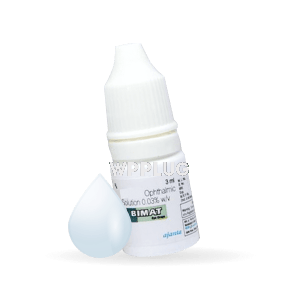
| Product dosage: 0.03mg | |||
|---|---|---|---|
| Package (num) | Per bottle | Price | Buy |
| 1 | $45.58 | $45.58 (0%) | 🛒 Add to cart |
| 2 | $43.43 | $91.16 $86.86 (5%) | 🛒 Add to cart |
| 3 | $43.00 | $136.74 $129.00 (6%) | 🛒 Add to cart |
| 4 | $42.78 | $182.32 $171.14 (6%) | 🛒 Add to cart |
| 5 | $42.48 | $227.90 $212.42 (7%) | 🛒 Add to cart |
| 6 | $42.43 | $273.48 $254.56 (7%) | 🛒 Add to cart |
| 7 | $42.26 | $319.06 $295.84 (7%) | 🛒 Add to cart |
| 8 | $42.25 | $364.64 $337.98 (7%) | 🛒 Add to cart |
| 9 | $42.24 | $410.22 $380.12 (7%) | 🛒 Add to cart |
| 10 | $42.14
Best per bottle | $455.80 $421.40 (8%) | 🛒 Add to cart |
Synonyms | |||
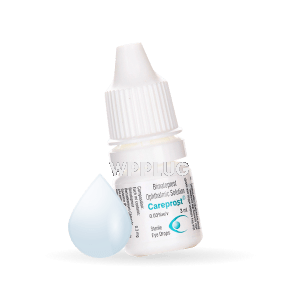
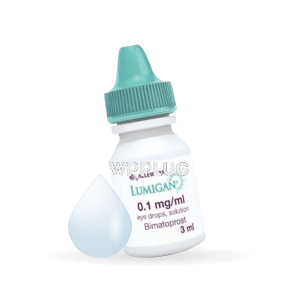
Lumigan: Advanced Glaucoma Therapy for Intraocular Pressure Control
Lumigan (bimatoprost ophthalmic solution) 0.01% is a prostaglandin analog ophthalmic solution indicated for the reduction of elevated intraocular pressure (IOP) in patients with open-angle glaucoma or ocular hypertension. As a first-line therapeutic agent, it offers a well-established efficacy profile with a favorable dosing regimen. Its mechanism of action primarily involves increasing uveoscleral outflow, providing consistent 24-hour IOP control. Clinicians frequently prescribe Lumigan for its balance of potency, tolerability, and patient adherence support in long-term management.
Features
- Active ingredient: Bimatoprost 0.01%
- Pharmacological class: Prostaglandin analog
- Presentation: Sterile, isotonic, buffered ophthalmic solution
- Preservative: Benzalkonium chloride 0.05 mg/mL
- pH: Approximately 7.2; osmolarity ~290 mOsm/kg
- Packaging: 2.5 mL or 5 mL low-density polyethylene bottle with controlled dropper tip
Benefits
- Provides significant and sustained reduction of intraocular pressure, with mean reductions of 25–33% from baseline
- Offers once-daily dosing, enhancing patient compliance and simplifying treatment regimens
- Demonstrates consistent 24-hour IOP control, including during nocturnal hours when pressure fluctuations may occur
- Shows efficacy in various patient populations, including those insufficiently controlled by other ocular hypotensive agents
- May slow glaucoma progression by maintaining target pressure levels, potentially preserving visual field
- Generally well-tolerated with a established safety profile supported by extensive clinical use
Common use
Lumigan is primarily prescribed for the management of open-angle glaucoma and ocular hypertension. It is often utilized as monotherapy but may be combined with other IOP-lowering medications when additional pressure control is required. The medication is suitable for long-term use, with many patients continuing treatment for years under appropriate ophthalmological supervision. Clinical studies have demonstrated its effectiveness across diverse demographic groups, including elderly patients and those with various stages of glaucoma severity.
Dosage and direction
The recommended dosage is one drop in the affected eye(s) once daily in the evening. Administration should occur at approximately the same time each day to maintain consistent therapeutic levels. Patients should be instructed to avoid allowing the dropper tip to contact any surface to prevent contamination. If using other topical ophthalmic medications, allow at least 5 minutes between instillations. Contact lenses should be removed prior to administration and may be reinserted 15 minutes after instillation.
Precautions
Patients should be advised that Lumigan may gradually increase brown pigmentation of the iris, which may be permanent. Eyelid skin darkening may occur and may be reversible upon discontinuation. There is potential for gradual changes to eyelashes and vellus hair in the periorbital region, including increased length, thickness, and pigmentation. Patients should be monitored for intraocular inflammation and macular edema, particularly in aphakic patients, pseudophakic patients with torn posterior lens capsule, or patients with known risk factors. Use with caution in patients with active intraocular inflammation.
Contraindications
Lumigan is contraindicated in patients with hypersensitivity to bimatoprost or any component of the formulation. It should not be used in cases of active ocular infections, particularly herpes simplex keratitis, unless the potential benefits outweigh the risks. The medication is not recommended for use in pediatric patients as safety and effectiveness have not been established. Patients with history of or risk factors for uveitis should generally avoid prostaglandin analogs.
Possible side effects
The most common ocular adverse reactions (occurring in approximately 15-45% of patients) include conjunctival hyperemia, growth of eyelashes, and ocular pruritus. Between 3-10% of patients may experience dry eye, visual disturbance, ocular burning, foreign body sensation, eye pain, pigmentation of the periocular skin, blepharitis, cataract, superficial punctate keratitis, eyelid erythema, ocular irritation, and eyelash darkening. Less frequent side effects (<3%) include iritis, cystoid macular edema, periorbital edema, and misdirected eyelashes sometimes requiring epilation.
Drug interaction
Although systemic absorption is low, potential interactions exist with other prostaglandin analogs, which may diminish the IOP-lowering effect. Concurrent use with pilocarpine may reduce the efficacy of both medications. Thimerosal-containing products may cause precipitation when used concomitantly. Patients using medications that affect blood clotting should be monitored due to potential increased vascular permeability. No clinically significant interactions with systemic medications have been identified, but caution is advised with drugs that affect intraocular pressure.
Missed dose
If a dose is missed, patients should administer the drop as soon as they remember, unless it is nearly time for the next scheduled dose. In that case, the missed dose should be skipped and the regular dosing schedule resumed. Patients should not instill two doses at the same time to make up for a missed dose. Consistent daily use is important for maintaining intraocular pressure control, so patients should be counseled on adherence strategies.
Overdose
Ocular overdose may be flushed from the eye(s) with warm tap water. Systemic absorption following ocular administration is minimal, making systemic toxicity unlikely. However, if the contents of multiple bottles are ingested orally, symptomatic treatment should be provided based on clinical presentation. There is no specific antidote for bimatoprost overdose. Patients experiencing significant ocular irritation should seek ophthalmological evaluation.
Storage
Store at 2°C to 25°C (36°F to 77°F). Protect from light. Keep the bottle tightly closed when not in use. Once opened, the solution should be used within 28 days. Do not freeze. Keep out of reach of children and pets. Do not use if the solution changes color or becomes cloudy.
Disclaimer
This information is provided for educational purposes only and does not constitute medical advice. Treatment decisions should be made by qualified healthcare professionals based on individual patient circumstances. Patients should not alter their treatment regimen without consulting their ophthalmologist. The full prescribing information should be consulted before initiating therapy.
Reviews
Clinical studies demonstrate that approximately 70-80% of patients achieve target intraocular pressure reduction with Lumigan monotherapy. In comparative trials, Lumigan showed superior efficacy to timolol and comparable efficacy to other prostaglandin analogs with a favorable side effect profile. Long-term extension studies indicate maintained efficacy for up to 4 years of continuous treatment. Patient satisfaction surveys report high adherence rates due to the once-daily dosing schedule, though some patients discontinue due to ocular hyperemia or cosmetic changes.