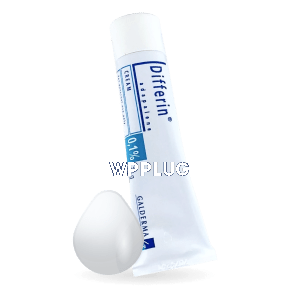
| Product dosage: 0.1% 15g | |||
|---|---|---|---|
| Package (num) | Per tube | Price | Buy |
| 2 | $20.64 | $41.28 (0%) | 🛒 Add to cart |
| 3 | $18.92 | $61.92 $56.76 (8%) | 🛒 Add to cart |
| 4 | $18.06 | $82.56 $72.24 (13%) | 🛒 Add to cart |
| 5 | $17.20 | $103.20 $86.00 (17%) | 🛒 Add to cart |
| 6 | $16.34 | $123.84 $98.04 (21%) | 🛒 Add to cart |
| 7 | $15.48 | $144.48 $108.36 (25%) | 🛒 Add to cart |
| 8 | $15.05 | $165.12 $120.40 (27%) | 🛒 Add to cart |
| 9 | $14.62 | $185.76 $131.58 (29%) | 🛒 Add to cart |
| 10 | $12.90
Best per tube | $206.40 $129.00 (38%) | 🛒 Add to cart |
Synonyms | |||
Differin: Prescription-Strength Acne Treatment for Clearer Skin
Differin (adapalene) is a topical retinoid medication specifically formulated for the treatment of acne vulgaris. Originally available by prescription only, it is now offered over-the-counter in lower concentrations, providing a clinically proven, dermatologist-recommended option for managing non-inflammatory and inflammatory acne lesions. Its mechanism of action normalizes skin cell turnover and reduces inflammation, targeting multiple pathways in acne pathogenesis. This makes it a cornerstone in both initial and maintenance therapy regimens for patients seeking long-term control.
Features
- Active ingredient: Adapalene 0.1% (prescription-strength) or 0.3% (prescription-only)
- Formulation: Gel, cream, or lotion vehicle; oil-free and non-comedogenic
- Pharmacologic class: Third-generation synthetic retinoid
- Prescription status: 0.1% available OTC; 0.3% requires prescription
- pH-balanced to minimize irritation while maintaining stability
Benefits
- Reduces microcomedone formation, preventing new acne lesions before they become visible
- Decreases inflammation associated with papules and pustules through anti-inflammatory properties
- Normalizes follicular keratinization to unclog pores and reduce blackheads and whiteheads
- Provides long-term maintenance of clear skin with continued use
- Compatible with combination therapy including benzoyl peroxide and antibiotics
- Non-antibiotic mechanism reduces risk of bacterial resistance development
Common use
Differin is primarily indicated for the topical treatment of acne vulgaris in patients 12 years of age and older. It demonstrates efficacy against both non-inflammatory (comedones) and inflammatory (papules, pustules) lesions. Dermatologists frequently recommend it as first-line monotherapy for mild to moderate acne or as part of combination regimens for more severe cases. Off-label uses may include treatment of keratosis pilaris, photoaging, and certain keratinization disorders, though these applications require professional supervision.
Dosage and direction
Apply a thin film of Differin to affected areas once daily, preferably in the evening after gently washing face with a mild cleanser and patting dry. Use approximately a pea-sized amount for the entire face; excessive application increases irritation risk without enhancing efficacy. Avoid eyes, lips, nostrils, and mucous membranes. Wash hands immediately after application. During initial weeks of treatment, application every other day may improve tolerance. Clinical improvement typically appears after 8-12 weeks of continuous use.
Precautions
- Initiate therapy with lower frequency (every other day) if sensitive skin is present
- Use sunscreen with SPF 30 or higher daily as retinoids increase photosensitivity
- Avoid waxing treated areas due to increased risk of skin stripping
- Discontinue use if excessive irritation, erythema, or peeling occurs
- Do not apply to sunburned, windburned, or broken skin
- Consult dermatologist if no improvement occurs after 12 weeks of regular use
- Pregnancy Category C: Use only if potential benefit justifies potential risk
Contraindications
- Hypersensitivity to adapalene or any component of the formulation
- Application to eczematous or acutely inflamed skin
- Use concurrently with other potentially irritating topical products (unless directed by physician)
- Patients with personal or family history of skin cancer (relative contraindication requiring specialist consultation)
Possible side effects
Most side effects are dose-dependent and often diminish with continued use:
- Cutaneous: Dryness (45%), erythema (32%), burning/stinging (15%), peeling (22%)
- Localized: Pruritus (13%), skin irritation (10%), photosensitivity reaction (5%)
- Less common: Skin discoloration, contact dermatitis, eyelid edema
- Typically peaks at 2-4 weeks and improves thereafter with proper moisturization and adherence
Drug interaction
- Enhanced irritation potential with concomitant use of other topical acne medications (benzoyl peroxide, salicylic acid, azelaic acid)
- Increased dryness and peeling when used with topical alcohol-based products
- Potential interaction with photosensitizing medications (tetracyclines, fluoroquinolones, thiazides)
- Caution advised with topical corticosteroids due to potential barrier compromise
- Avoid concomitant use of abrasive cleansers or exfoliants
Missed dose
Apply as soon as remembered unless almost time for next application. Do not double application to compensate for missed dose. Maintain regular once-daily scheduling; inconsistent application reduces efficacy and may prolong the initial adjustment period.
Overdose
Topical overdose may manifest as severe erythema, peeling, or discomfort. Treatment involves discontinuation until skin recovery, soothing emollients, and supportive care. Systemic absorption through topical application is minimal, making internal toxicity unlikely. If accidental ingestion occurs, seek medical attention immediately though significant systemic effects are not anticipated given low bioavailability.
Storage
Store at room temperature (20-25°C/68-77°F); avoid freezing. Keep tube tightly closed and protect from light. Do not store in bathroom where humidity and temperature fluctuations may degrade product stability. Keep out of reach of children. Discard any product that has changed color or consistency.
Disclaimer
This information does not replace professional medical advice. Consult a dermatologist or healthcare provider for proper diagnosis and treatment recommendations. Individual results may vary based on acne severity, skin type, and adherence to treatment protocol. Not all patients will experience complete clearance of acne lesions.
Reviews
Clinical studies demonstrate 60-70% reduction in inflammatory lesions and 45-55% reduction in non-inflammatory lesions after 12 weeks of use. Dermatologists consistently rate Differin as a first-line therapy due to its favorable efficacy-to-irritation profile compared to older retinoids. Patient reviews frequently note initial “purge” period (weeks 2-6) followed by significant improvement in skin texture and lesion count. Long-term users report maintained efficacy with minimal side effects when used as directed.